Liuqiao Waterwheel Figure Screen
"Liuqiao Waterwheel Picture Screen" is a six-fan screen depicting the scenery of the Musashino area in Japan. This screen displays elements such as golden bridges, willows, waterwheel and snake cage, forming a beautiful natural landscape. This screen was very popular during the Taoshan period and the early Edo period.
Japanese Screen - Xiangyun
Also known as "screen painting" or "screen", it is an important form of traditional Japanese art. Originating in China, it later spread to Japan and gradually developed a unique Japanese style. It is usually composed of multiple connected screens that can be folded and unfolded for easy carrying and storage. The materials of screens are diverse, including paper, silk, wood, etc. They are often painted with patterns of mountains, rivers, flowers, birds, and figures, reflecting Japan's natural scenery and cultural characteristics. Although the practicality of screens has weakened, their artistic and decorative qualities are still loved by people.
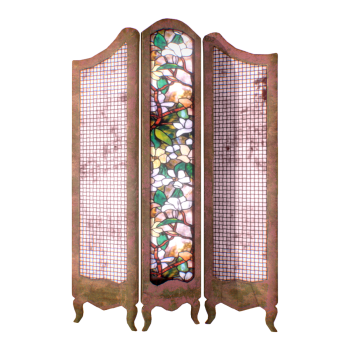
Japanese Screen - Flower Butterfly
Also known as "screen painting" or "screen", it is an important form of traditional Japanese art. Originating in China, it later spread to Japan and gradually developed a unique Japanese style. It is usually composed of multiple connected screens that can be folded and unfolded for easy carrying and storage. The materials of screens are diverse, including paper, silk, wood, etc. They are often painted with patterns of mountains, rivers, flowers, birds, and figures, reflecting Japan's natural scenery and cultural characteristics. Although the practicality of screens has weakened, their artistic and decorative qualities are still loved by people.
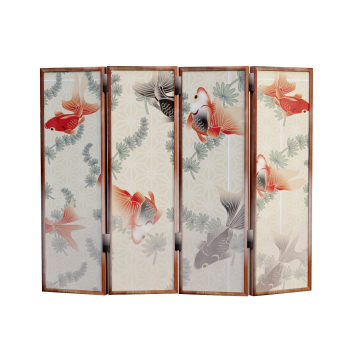
Japanese Screen - Goldfish
Also known as "screen painting" or "screen", it is an important form of traditional Japanese art. Originating in China, it later spread to Japan and gradually developed a unique Japanese style. It is usually composed of multiple connected screens that can be folded and unfolded for easy carrying and storage. The materials of screens are diverse, including paper, silk, wood, etc. They are often painted with patterns of mountains, rivers, flowers, birds, and figures, reflecting Japan's natural scenery and cultural characteristics. Although the practicality of screens has weakened, their artistic and decorative qualities are still loved by people.
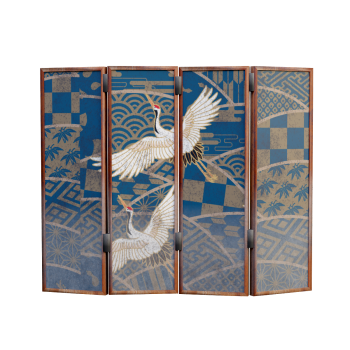
Japanese Screen - Red crowned Crane
Also known as "screen painting" or "screen", it is an important form of traditional Japanese art. Originating in China, it later spread to Japan and gradually developed a unique Japanese style. It is usually composed of multiple connected screens that can be folded and unfolded for easy carrying and storage. The materials of screens are diverse, including paper, silk, wood, etc. They are often painted with patterns of mountains, rivers, flowers, birds, and figures, reflecting Japan's natural scenery and cultural characteristics. Although the practicality of screens has weakened, their artistic and decorative qualities are still loved by people.
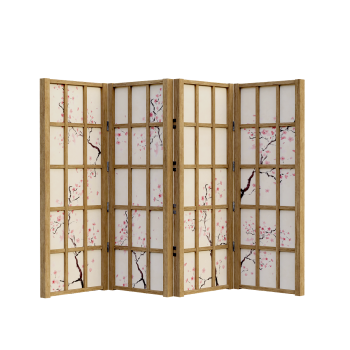
Japanese cherry blossom pattern solid wood screen
It is an interior decoration that combines traditional craftsmanship and natural aesthetics. Usually made of carefully selected solid wood materials, the surface is painted with exquisite cherry blossom patterns. As Japan's national flower, cherry blossoms symbolize beauty, transience, and rebirth. Solid wood screens not only have high ornamental value, but also have the functions of separating spaces, providing privacy, and decorating interiors. Design often combines traditional Japanese art styles with modern design concepts, giving it both classical charm and modernity.
Popular Models
Random Model
Lebron XV Classic Sneakers
708 View
Soviet KV1 Heavy Tank
843 View
Children's outdoor slide combination
500 View
Bombardier TALENT train
877 View
PUMA future rider red sneaker
582 View
Knight Armor
676 View
chevrolet Chevelle
984 View